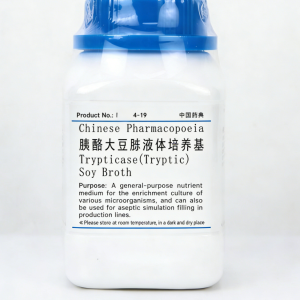
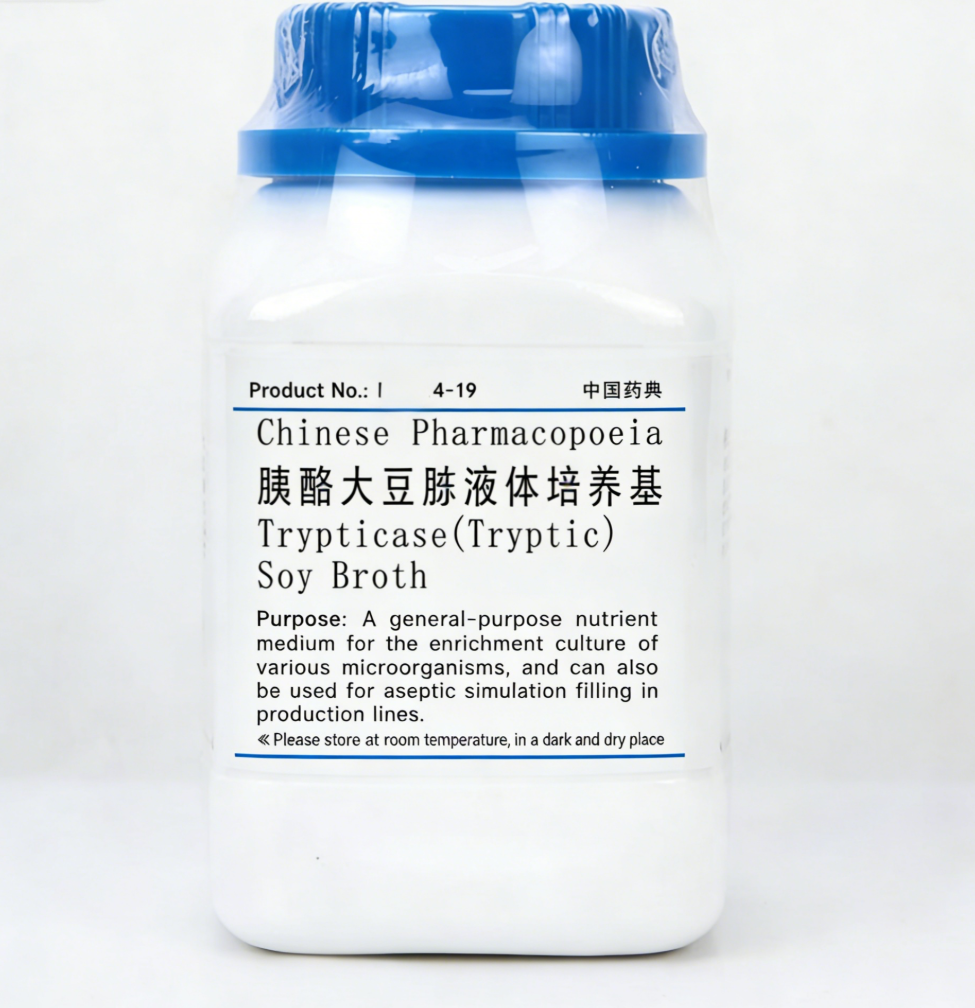
Tryptic Soy Broth (TSB), also known as Cheese Soy Broth Liquid Medium, is a classic universal nutrient medium strictly formulated in accordance with the Chinese Pharmacopoeia. It provides an optimal growth environment for a wide range of microorganisms, making it an essential reagent in pharmaceutical, food, cosmetics and life science laboratories.
Key Specifications
- Product Name: Tryptic Soy Broth (TSB) Liquid Medium (Chinese Pharmacopoeia)
- Specification: 250g/bottle
- Shelf Life: 3 years
- pH Value: 7.3 ± 0.2 (at 25℃)
- Grade: Biochemical Reagent (BR)
Formula (per liter)
| Component | Content (g/L) |
|---|---|
| Mycoprotein Peptone | 17.0 |
| Soy Papain Hydrolysate | 3.0 |
| Sodium Chloride | 5.0 |
| Dipotassium Phosphate | 2.5 |
| Glucose | 2.5 |
Test Principle
- Peptone and soy papain hydrolysate provide nitrogen sources, vitamins and growth factors to support microbial growth.
- Glucose serves as a carbon source for microbial metabolism.
- Dipotassium phosphate acts as a buffer to stabilize the pH value of the medium.
- Sodium chloride maintains appropriate osmotic pressure to protect microbial cell structure.
Applications
- Enrichment Culture: Universal medium for the cultivation of a wide variety of bacteria, yeasts and molds.
- Aseptic Simulation Filling: Compliant with Chinese Pharmacopoeia requirements for production line aseptic process validation.
- Microbial Limit Test: Used for sterility testing and microbial limit inspection of pharmaceuticals, food and cosmetics.
Usage Instructions
- Weigh 30.0g of this product, add to 1000ml of purified water, heat and stir until fully dissolved.
- Dispense into test tubes or suitable containers.
- Sterilize by autoclaving at 121℃ for 15 minutes, or use filtration sterilization according to specific process requirements.
- Cool and store for later use.
Storage & Handling
- Store the dry powder in a cool, dry place away from direct sunlight.
- Keep the bottle tightly sealed after opening to prevent moisture absorption.
- For laboratory use only, not for clinical diagnosis or food processing.
- Follow sterile operating procedures during preparation to avoid contamination.